 Skip to content

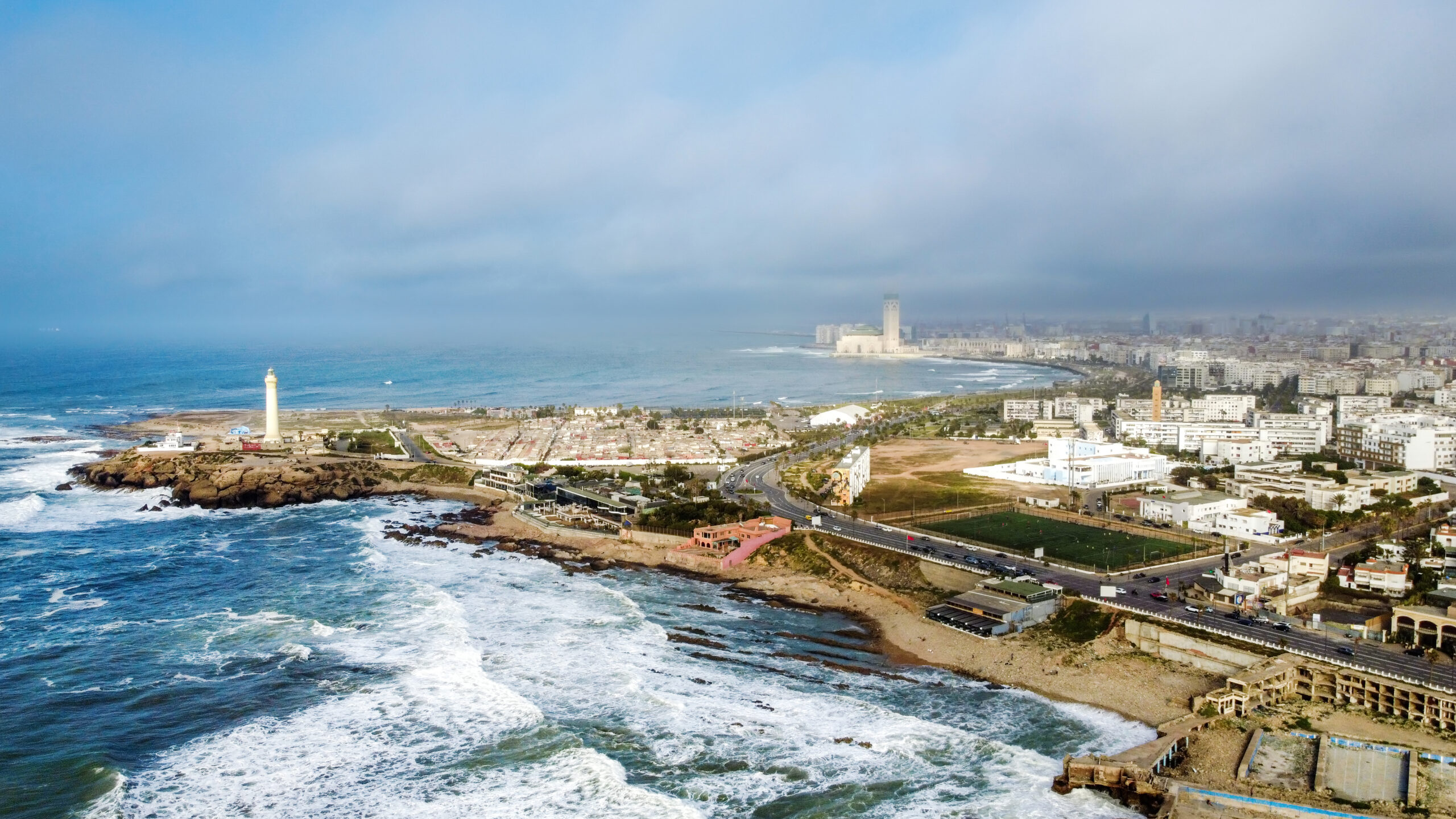
Apartments are by far the most commonly purchased type of real estate in Casablanca, and with an average price of about 12,500 MAD per square meter, they remain affordable for many foreign buyers from Belgium, the Netherlands, and France. The exact price depends heavily on the neighborhood: in upscale central neighborhoods such as Gauthier and Racine, prices range from 16,000 to 18,000 MAD per square meter, while on the coast in Anfa and Ain Diab, prices range from 20,000 to 28,000 MAD per square meter. An apartment is attractive because it requires relatively little maintenance, is easy to rent out, and allows you to enter a vibrant, stable market. In this article, you’ll learn how much an apartment costs by neighborhood, what to look out for, how financing works, and how it compares to a villa or new construction.
Summary: These are the key points
- Average price: On average, an apartment costs about 12,500 MAD per square meter.
- Central neighborhoods: Gauthier and Racine range from about 16,000 to 18,000 MAD per square meter.
- Coastal neighborhoods: Prices in Anfa and Ain Diab range from 20,000 to 28,000 MAD per square meter.
- Advantages: Low maintenance, easy to rent out, and a lower barrier to entry than a villa.
- Please note: service fees (property manager), the condition of the building, the floor, and the location.
- Additional costs: Expect to pay 6 to 8 percent on top of the purchase price for notary fees, registration, and land registry fees.
- New Construction: modern and exempt from property tax for the first five years; often purchased off-plan.
How much does an apartment cost by neighborhood in Casablanca?
The price of an apartment in Casablanca varies greatly from neighborhood to neighborhood. On average, you’ll pay about 12,500 MAD per square meter, but that average doesn’t tell the whole story without considering the specific neighborhood. In the central, upscale neighborhoods, you pay a premium for the location, amenities, and vibrancy, while on the coast, you’re primarily paying for the ocean view and prestige. The table below provides an overview of indicative prices per square meter in the most popular neighborhoods for 2026. Keep in mind that asking prices are typically higher than the final transaction prices, so there is often room to negotiate.
| Neighborhood | Price per square meter (MAD) | Character |
|---|---|---|
| Gauthier | 16,000 to 18,000 | chic, central, professionals |
| Racine | 17,000 to 18,000 | chic, central |
| Maarif | 14,000 to 17,000 | lively, commercial, shops |
| Anfa | 22,000 to 28,000 | exclusive, high-end |
| Ain Diab | 20,000 to 25,000 | coast, ocean view, luxury |
As you can see, prices for the same floor area can vary widely. Based on these figures, a 90-square-meter apartment in Maarif costs somewhere between 1.26 and 1.53 million MAD, while the same size in Ain Diab can easily reach 1.8 to 2.25 million MAD. Which neighborhood suits you best depends on your goal: do you want to live there yourself, rent it out, or both? Read more about the differences in our guide to the Best Neighborhoods in Casablanca and in our article about Gauthier and Maarif.
Advantages of an Apartment
It’s no coincidence that apartments are the most popular type of housing in Casablanca. For both residents and investors, they offer a combination of convenience, affordability, and return on investment that other types of housing don’t always match. Here are the main advantages:
- A lower barrier to entry than a villa, allowing you to buy in a good neighborhood even on a more limited budget.
- Relatively little maintenance, since the building is largely managed by the syndicate (the homeowners' association).
- Good rental potential, especially in central neighborhoods and along the coast, with stable demand from tenants and expats.
- Often, security is enhanced by a locked building, a doorman, and sometimes security guards.
- A wide selection in all price ranges, from move-in-ready existing homes to modern new construction off-plan.
On the other hand, with an apartment, you have less privacy and outdoor space than with a villa, and you’re dependent on the agreements and budget of the co-owners. Still, for most buyers, the advantages outweigh the disadvantages, especially if the goal is a combination of personal use and renting it out. For those specifically looking for space and a garden, a villa in Casablanca be a better alternative.
Rentability of an Apartment
One of the strongest arguments for buying an apartment in Casablanca is its rental potential. Casablanca is the economic capital of Morocco and has a stable demand for rental properties, coming from local professionals as well as expats and corporate tenants. In central neighborhoods such as Gauthier, Racine, and Maarif, demand for well-located apartments is consistently high, as tenants prefer to live close to offices, shops, and restaurants. This results in relatively short vacancy periods and predictable returns.
On the coast, in Ain Diab, and along the Corniche, demand is more focused on expats and vacation rentals. Apartments with ocean views or within walking distance of the beach and beach clubs are popular for shorter rental periods and among tenants willing to pay a higher rent for the location. The return on investment varies by neighborhood and property type, and it’s always best to calculate it on a net basis—that is, after deducting the 6 to 8 percent in additional costs, annual taxes, and any service fees. This gives you a realistic picture of what your apartment actually yields, rather than an overly optimistic gross calculation.
What should you look for when making a purchase?
Not every apartment is an equally good buy. In addition to the price per square meter, there are a few specific factors to consider that will determine whether you’re making a good purchase and whether the property will remain easy to rent or sell in the future. The following points deserve special attention before you make an offer.
Service Fees and the Property Manager
In an apartment building, you pay monthly or annual service fees to the property management association, the organization that handles the common areas. These fees cover things like cleaning, the elevator, concierge services, lighting in common areas, and sometimes security. Be sure to find out in advance how much these fees are and exactly what they cover, as they affect your net return and your monthly expenses. Also check to make sure there are no outstanding fees associated with the apartment and whether any major common-area expenses are planned, such as renovating the facade or replacing the elevator, for which you may have to contribute.
The Condition of the Building
A beautifully renovated apartment in a poorly maintained building remains a risk. Therefore, don’t just look at the apartment itself, but also at the common areas: the entryway, the stairwell, the elevator, the facade, and the roof. A well-maintained building retains its value better and helps avoid unexpected costs. With older properties, pay attention to signs of moisture, the condition of the plumbing, and the electrical system. If in doubt, it’s wise to bring along a structural engineer or a local expert before proceeding with the purchase, especially if you’re buying remotely and can’t thoroughly inspect the property yourself.
The floor and the location within the building
The floor on which the apartment is located affects its comfort, price, and marketability. Higher floors generally offer more natural light, less street noise, and often a better view, but they are less practical without a well-functioning elevator. A ground-floor apartment is more accessible but may have less privacy and be noisier. Also consider the orientation: apartments with plenty of natural light and a pleasant orientation are popular with both buyers and renters. These details may seem minor, but they make a noticeable difference in value and rentability over the long term.
Its location in the neighborhood
Even within the same neighborhood, prices and desirability can vary significantly from street to street. An apartment within walking distance of shops, schools, public transportation, and green spaces is more valuable and easier to rent than a comparable property on a busy or less desirable street. Also pay attention to parking availability, as a private parking space is a clear added value in central neighborhoods. If possible, walk through the neighborhood at different times of the day to get a good sense of the atmosphere, foot traffic, and amenities before making a decision.
New construction or existing property?
When choosing an apartment, you’ll need to decide whether to go with a new construction or an existing home. Both have their advantages, and the right choice depends on your budget, your time horizon, and your preferences. New construction is modern, energy-efficient, and requires little maintenance in the early years. In addition, new homes are typically exempt from the annual property tax for the first five years, which is attractive from a tax perspective. In Casablanca, new construction is often sold off-plan—known as VEFA or “purchase off-plan”—where you make payments in installments as construction progresses.
One advantage of existing properties is that you can see exactly what you’re buying and can move in or rent it out right away, without having to wait for completion. Existing properties are also more often located in established, central neighborhoods with proven demand. On the other hand, an older apartment may require more maintenance and sometimes needs to be renovated. If you want to weigh the pros and cons of a modern property, read more in our article about Buying a New Home in Casablanca. Whether a new construction or an existing home is a better fit for you ultimately depends on your personal situation and goals.
Financing and Additional Costs
In addition to the purchase price, you should factor in additional costs of approximately 6 to 8 percent. These consist of registration fees of about 4 percent for developed real estate, land registry fees at the ANCFCC ranging from 1 to 1.5 percent, and notary fees ranging from 0.5 to 1.5 percent plus VAT, along with minor stamp and administrative fees. Be sure to include this expense in your budget from the very beginning, so you know exactly how much you’ll need in total. You’ll find a complete overview with a sample calculation in our article about the Costs Associated with Buying Real Estate in Casablanca.
If you’d like to finance part of the purchase, this is also possible for foreigners. Moroccan banks such as CIH Bank, Attijariwafa Bank, Bank of Africa, and Banque Populaire offer mortgages to non-residents. Interest rates in dirhams are generally around 5 to 6.5 percent, while loans in euros are often lower, ranging from 3.8 to 4.6 percent. Banks generally finance 50 to 70 percent of the property’s value, so you’ll need to contribute at least 30 percent in foreign currency, plus any additional costs. Read more about the terms and conditions in our article on Mortgages and Financing for Foreigners.
Apartment vs. Villa and New Construction
To make the right choice, it helps to compare an apartment with other types of housing. An apartment is generally the most affordable and easiest to rent out, requiring little maintenance and offering a wide selection. A villa provides more space, privacy, and often a garden or pool, but requires a higher budget and more maintenance, and is concentrated in neighborhoods such as Anfa, Bouskoura, and Dar Bouazza. Finally, new construction is a category unto itself that includes both apartments and villas and is attractive due to its modern finishes, energy efficiency, and tax exemption for the first five years.
For a foreign buyer primarily looking for a combination of personal use and rental income, an apartment in a central or coastal neighborhood is often the logical starting point. It requires a smaller budget than a villa, is easier to manage remotely, and enjoys stable rental demand. However, those who value space, privacy, and a garden highly are more likely to choose a villa. For a complete overview of all types of homes, neighborhoods, and steps in the home-buying process, see the A Complete Guide to Buying Real Estate in Casablanca, so that you can make an informed decision.
Common Mistakes You Should Avoid
- Focusing only on the average price per square meter and ignoring the significant differences between neighborhoods.
- Do not check the property manager's service fees and any overdue dues in advance.
- Focus only on the apartment itself and overlook the condition of the common areas.
- Don't forget to factor the additional costs of 6 to 8 percent into the budget.
- Calculate the gross return rather than the net return, after deducting expenses and taxes.
Frequently Asked Questions
What is the average price of an apartment in Casablanca?
On average, an apartment costs about 12,500 MAD per square meter. Prices vary significantly by neighborhood: in Maarif, you can expect to pay 14,000 to 17,000 MAD, and in Gauthier, 16,000 to 18,000 MAD per square meter.
Which neighborhood is the most expensive for an apartment?
The coastal and upscale neighborhoods are the most expensive. In Anfa, prices range from 22,000 to 28,000 MAD per square meter, and in Ain Diab from 20,000 to 25,000 MAD per square meter, mainly due to the ocean views and prestige.
As a foreigner, can I buy an apartment in Casablanca?
Yes. Foreigners are free to purchase residential real estate in urban areas of Morocco without a residence permit, visa, or Moroccan partner. You can even purchase remotely using a notarized power of attorney.
What are the service fees for an apartment?
The service fees go to the property manager or the homeowners' association and cover, among other things, cleaning, the elevator, lighting, and sometimes security. Be sure to check the amount in advance, as these fees affect your net return.
Is a new home or an existing home better?
That depends on your goal. New construction is modern, energy-efficient, and exempt from property tax for the first five years, but it’s often a pre-sale purchase. With existing homes, you can see them right away and move in or rent them out immediately.
How much will I have to pay in additional costs for an apartment?
Expect to pay 6 to 8 percent on top of the purchase price: registration fees of approximately 4 percent, land registry fees of 1 to 1.5 percent, and notary fees of 0.5 to 1.5 percent, plus VAT.
Is an apartment easy to rent out in Casablanca?
Yes. In central neighborhoods such as Gauthier, Racine, and Maarif, rental demand is consistently high, and along the coast in Ain Diab, there is strong demand from expats and tourists. Always calculate the return on investment on a net basis.
Please note: The prices, rates, and taxes listed are estimates based on public sources (2026) and may vary by neighborhood, project, and time. Always have the exact amounts confirmed by your notary, bank, or real estate agent before entering into any commitment.
 Dutch
 English
 French