 Skip to content

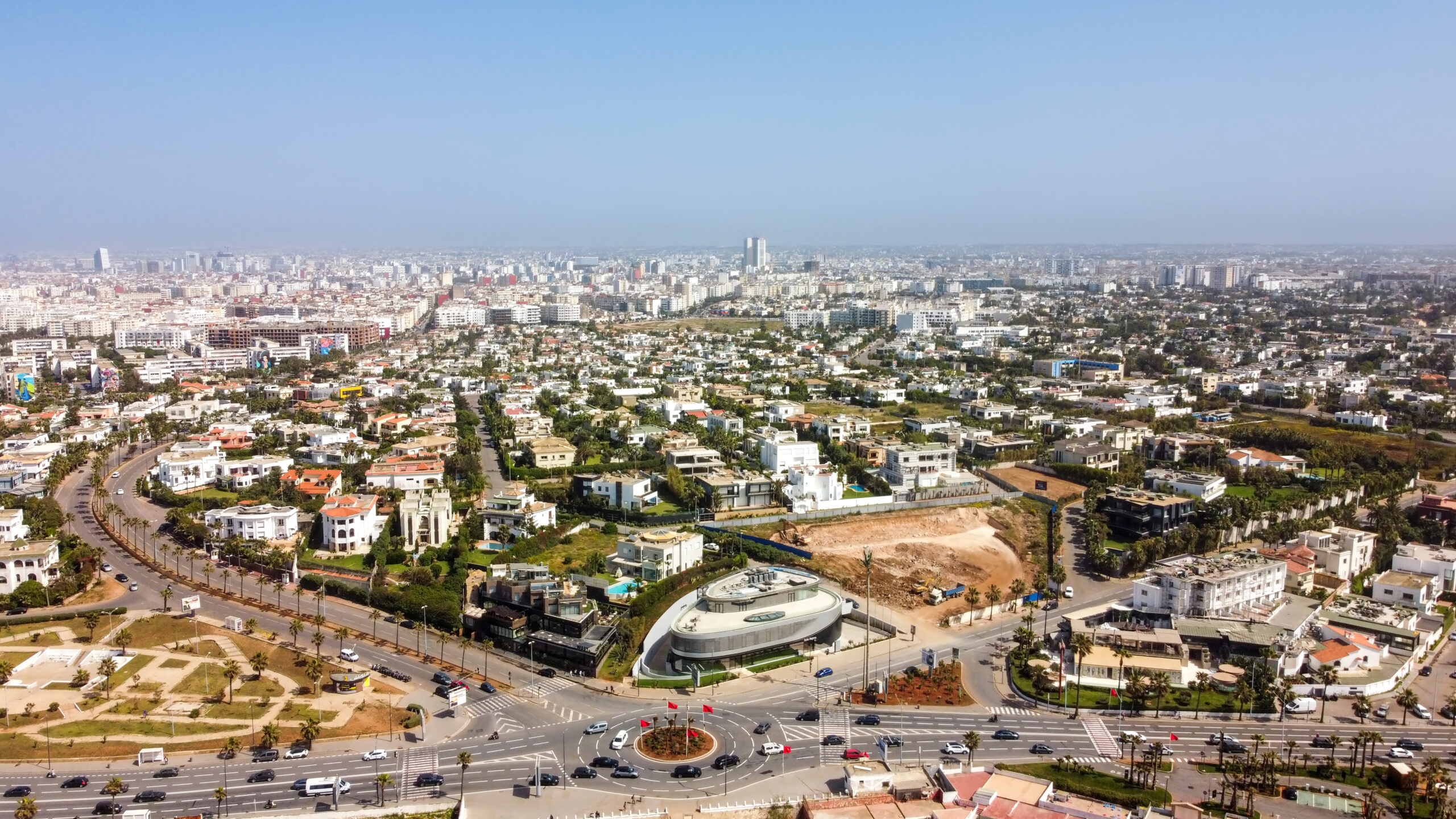
Casablanca is the economic capital of Morocco and one of the most dynamic real estate markets in North Africa. Foreigners can freely purchase real estate there, without a residence permit and without a Moroccan partner. On average, you’ll pay around 12,500 MAD per square meter for an apartment and about 16,500 MAD per square meter for a villa, with additional costs of approximately 6 to 8 percent on top of the purchase price. In this comprehensive guide, you’ll learn step by step how the purchasing process works, what costs and taxes to expect, which neighborhoods and property types are available, how to arrange financing as a foreigner, and whether investing in Casablanca is worth it.
Summary: These are the key points
- Admission: Foreigners are free to purchase residential and commercial real estate, except for agricultural land outside designated zones.
- Prices: On average, around 12,500 MAD/m² for apartments and 16,500 MAD/m² for villas; prime locations such as Anfa and Aïn Diab can reach up to 28,000 MAD/m².
- Additional costs: Expect 6 to 8 percent (registration fees approximately 4 percent, land registry fees 1 to 1.5 percent, notary fees 0.5 to 1.5 percent).
- Process: sales agreement, title search with the ANCFCC, and the final deed (acte de vente) at the notary's office.
- Title of Ownership: Only purchase real estate with a registered Titre Foncier.
- Funding: Moroccan banks offer mortgages to nonresidents, typically for 50 to 70 percent of the property's value.
- Buying Online This can be done through a notarized power of attorney.
Can foreigners buy real estate in Casablanca?
Yes. Any foreign national is free to purchase residential, commercial, hotel, and industrial real estate in urban Morocco. You do not need a residence permit, a visa, or a Moroccan partner, nor do you need to establish a local company for a standard residential purchase. This makes Casablanca accessible to Belgian, Dutch, and other international buyers looking for a primary residence, a second home, or an investment property.
The most important exception concerns agricultural land outside designated zones. A special permit (an exemption) is required for this, and this land falls into a higher risk category. For most buyers of an apartment or villa in the city, this is not an issue. Anyone considering purchasing land or a rural property should have the zoning and classification thoroughly checked in advance by a notary or attorney. While a clear title does prove who the owner is, it does not, in and of itself, indicate what you are permitted to build on the lot.
Why Buy Real Estate in Casablanca?
Casablanca is the economic and financial heart of Morocco. The city has millions of residents, is home to the country’s largest port, and continues to attract national and international companies. This economic engine drives stable and widespread demand for both owner-occupied and rental properties, ranging from move-in-ready apartments to luxury villas.
In addition, the entire region is looking forward to major events and infrastructure investments, including the lead-up to the 2030 World Cup. New tram lines, roads, and urban development make certain neighborhoods more attractive and can support property values over time. For foreign buyers, this is complemented by the relatively affordable price per square meter—especially compared to many European cities—and a vibrant city with a rich culture. If you’d like to get to know the city better first, be sure to read Things to Do in Casablanca.
How much does real estate cost per square meter in Casablanca?
Prices vary significantly by neighborhood, property type, and year of construction. The figures below are estimated prices based on recent market data for 2026. Keep in mind that asking prices in listings are typically higher than the final sale price, so use them as a guide rather than a fixed value.
| Neighborhood or segment | Estimated Price (MAD/m²) |
|---|---|
| Average Apartment in Casablanca | approximately 12,500 |
| Average villa | approximately 16,500 |
| Anfa Supérieur and Aïn Diab (new construction) | 22,000 to 28,000 |
| Gauthier, Racine, and Boulevard d’Anfa | 14,000 to 18,000 |
| Dar Bouazza (coast) | 10,000 to 22,000 |
The price per square meter depends on factors such as the floor level, the view, the condition and age of the building, and whether it is a new construction. You can find a complete overview in our article about the Real estate prices per square meter in Casablanca, and a description for each neighborhood in the guide about the Best Neighborhoods in Casablanca.
The purchasing process, step by step
Buying real estate in Casablanca is a structured process that takes place through a notary. Below are the main steps. You can find a detailed description in our article about How the purchasing process works.
1. Compromis de vente (preliminary purchase agreement)
The purchase begins with a preliminary purchase agreement, usually drawn up by a notary. This typically involves a down payment of 10 to 20 percent, which is deposited into an escrow account. During this phase, the price, terms, and deadlines are established. It is best to choose your own independent notary rather than the one suggested by the seller or real estate agent, to ensure that your interests are properly represented.
2. Title Search at the ANCFCC
The notary verifies the title to the property with the national land registry, the ANCFCC. This ensures that the seller is the rightful owner and that the property is free of mortgages, liens, or pending disputes. This verification is crucial: never pay the full amount before the title has been verified and found to be in order.
3. Deed of Sale (Final Deed)
After a successful title search, the final deed is signed at the notary’s office, the remaining balance is paid, and ownership is transferred and registered. From that moment on, you are the official owner of the property.
Purchasing Remotely Using a Power of Attorney
You do not necessarily have to be in Morocco to make a purchase. You can draw up a notarized power of attorney in your country of residence, have it legalized at the Moroccan consulate, and send it to your Moroccan notary. This allows the purchase to be completed entirely remotely, which is convenient for international buyers with busy schedules.
What additional costs are there on top of the purchase price?
In addition to the purchase price, you will generally pay between 6 and 8 percent in additional costs. These are largely mandated by law. You can find a detailed overview in our article about the expenses, notary fees, and taxes.
| Cost item | Recommended Rate |
|---|---|
| Registration Fees (Developed Real Estate) | about 4 percent |
| Registration Fees (Undeveloped Land) | about 5 percent |
| Land Registry (ANCFCC) | 1 to 1.5 percent |
| Notary Fees | 0.5 to 1.5 percent, plus VAT |
| Stamps and Administration | small fixed amounts |
Also, keep in mind that annual local taxes apply to property ownership, although new-construction homes are generally exempt from property tax for the first five years. Upon a subsequent sale, a capital gains tax of typically 20 percent applies, with a minimum of 3 percent of the sale price. Be sure to include these items in your return-on-investment calculation.
Title to Property: Titre Foncier vs. Melkia
In Morocco, there are two main forms of proof of ownership. The Land Title is a registered, state-guaranteed title maintained by the ANCFCC. Real estate with a Titre Foncier is easier to finance, insure, and sell, and carries a low risk of disputes. The Melkia is a traditional document drawn up by an adoul; it is not part of the official land registry and is most commonly found for older properties in the medina and in rural areas.
As a foreign buyer, you’ll almost always choose a property with a Titre Foncier. If you are nevertheless considering a Melkia property—for example, a charming home in the old medina—make sure the title is converted to a Titre Foncier before signing the contract. You can read more about this in our article on the Title to Property in Morocco.
Financing and Mortgages for Foreigners
Many foreign buyers combine their own funds with a mortgage. Moroccan banks provide loans to non-residents, although the terms are slightly stricter than those for residents. Interest rates are generally around 5 to 6.5 percent in dirhams, while loans in euros often have lower rates. The maximum loan-to-value (LTV) ratio is usually between 50 and 70 percent of the property’s value, so expect to make a down payment of at least 30 percent in foreign currency, plus closing costs.
Repayments are typically made through a convertible dirham account, and banks often require the borrower to have their own life insurance policy for the term of the loan. Well-known lenders for foreign buyers include CIH Bank, Attijariwafa Bank, Bank of Africa, and Banque Populaire. Always request written terms and conditions from multiple banks and compare the total costs, not just the interest rate. You can find all the details in our article on Mortgages and Financing for Foreigners.
The Best Neighborhoods to Buy In
Casablanca has neighborhoods to suit every lifestyle and budget. Below is a brief overview of the most popular neighborhoods. You can find a detailed discussion in the guide to the Best Neighborhoods in Casablanca.
- Aïn Diab: A fashionable coastal neighborhood along the Corniche, with ocean views, beach clubs, and luxury apartments.
- Anfa: the most exclusive neighborhood, featuring spacious villas and high-end new construction.
- Gauthier and Maârif: Central, vibrant neighborhoods with strong rental appeal.
- Bouskoura and Casablanca Finance City: emerging areas, specifically green family housing and modern commercial real estate.
- California: A quiet residential neighborhood, popular with families.
What types of homes are there?
The housing options in Casablanca are diverse. Which type is right for you depends on your budget, your goals, and your housing preferences.
- Apartments: The most popular style, easy to rent out, and relatively low-maintenance.
- Villas: Plenty of space and privacy, often with a garden and a pool; popular in Anfa, Bouskoura, and Dar Bouazza.
- New construction: Modern finishes, energy-efficient, and often offering tax benefits; frequently sold off-plan (VEFA).
- Riads and traditional homes: Charming properties in the old medina, suitable as renovation projects.
- Luxury Real Estate: Penthouses and villas with ocean views in Anfa, Aïn Diab, and CFC.
Is investing in Casablanca real estate worth it?
As the economic capital, Casablanca has a stable and broad demand for rental and owner-occupied homes. Central neighborhoods such as Gauthier, Racine, and Maârif combine strong rental appeal with a wide range of price points, while coastal neighborhoods like Aïn Diab are popular for renting to expats and tourists. Returns vary significantly depending on the neighborhood, property type, and whether you’re renting for the short or long term.
In light of the run-up to the 2030 World Cup and ongoing urban development, many investors see growth potential. Don't forget to factor in the additional costs and taxes, and check out the category Market and Investing For more in-depth information on returns and the rental market.
Common Mistakes You Should Avoid
- Pay before the title has been verified by the ANCFCC.
- Buying a Melkia property without converting it to a Titre Foncier.
- Use the seller's notary instead of your own, independent notary.
- You forgot to factor in the additional costs of 6 to 8 percent.
- Relying solely on the asking price without checking the actual market price per square meter.
Frequently Asked Questions
Can foreigners buy real estate in Casablanca?
Yes. Foreigners are free to purchase residential and commercial real estate in urban areas of Morocco without a residence permit, visa, or Moroccan partner. The only significant exception is agricultural land outside designated zones, for which a special permit is required.
How much does an apartment in Casablanca cost per square meter?
On average, the price is around 12,500 MAD/m². In prime locations such as Anfa and Aïn Diab, this rises to 22,000 to 28,000 MAD per square meter for new construction, while neighborhoods such as Gauthier and Racine range from 14,000 to 18,000 MAD per square meter.
What are the total additional costs associated with the purchase?
Expect to pay about 6 to 8 percent on top of the purchase price. This consists of registration fees (approximately 4 percent), land registry fees at the ANCFCC (approximately 1 to 1.5 percent), and notary fees (approximately 0.5 to 1.5 percent plus VAT), plus minor fixed costs.
Do I have to be in Morocco to buy it?
Not necessarily. You can draw up a notarized power of attorney in your country of residence, have it legalized at the Moroccan consulate, and send it to your Moroccan notary so that the purchase can be finalized remotely.
As a foreigner, can I get a mortgage?
Yes. Several Moroccan banks offer mortgages to non-residents, typically for 50 to 70 percent of the property's value, provided you can demonstrate a stable income in a hard currency.
What is the difference between a Titre Foncier and a Melkia?
A Titre Foncier is a registered, state-guaranteed title deed. A Melkia is a traditional document issued by an adoul that is not registered and carries greater risk. As a foreigner, you should always opt for a Titre Foncier.
Is real estate in Casablanca a good investment?
As the economic capital, Casablanca has a stable demand for rental and owner-occupied homes. With the 2030 World Cup on the horizon and ongoing urban development, many investors see growth potential, although returns vary significantly by neighborhood and property type.
Please note: The prices, rates, and taxes listed are estimates based on public sources (2026) and are subject to change. Always have the exact amounts confirmed by your notary, bank, or real estate agent before entering into any agreement.
 Dutch
 English
 French