 Skip to content


Buying a new-construction home in Casablanca means choosing a modern, energy-efficient home that is often exempt from property tax for the first five years. Many new-construction projects are also sold off-plan—known as VEFA—where you make payments in installments as the building is being constructed. This approach lowers the barrier to entry and spreads out your expenses, but it also requires extra vigilance regarding the developer, the building permit, and the completion guarantees. For buyers from Belgium, the Netherlands, or elsewhere, new construction is attractive because of its comfort, lower maintenance costs, and tax benefits. In this article, you’ll learn exactly what off-plan purchasing entails, what advantages new construction offers, what you’ll pay in neighborhoods like Anfa and Ain Diab, what to look out for in a project, and how the payment schedule, financing, and costs work.
Summary: These are the key points
- New Construction: modern, energy-efficient, and often exempt from property tax for the first five years.
- VEFA or off-plan purchase: You buy off-plan and make payments in installments during construction.
- Prices for new construction in Anfa and Ain Diab: Approximately 22,000 to 28,000 MAD per square meter.
- Check the developer: reputation, past projects, and financial stability.
- Legal: building permit, completion guarantees, and a separate Titre Foncier for each lot.
- Costs: Here, too, expect 6 to 8 percent in additional costs on top of the price.
What is off-plan purchasing (VEFA)?
Buying off-plan, known in French as VEFA (vente en l’état futur d’achèvement), means that you are purchasing a home that has not yet been built or is not yet fully completed. You enter into an agreement with the developer based on plans, specifications, and finish lists, and you pay the purchase price in installments as construction progresses. This approach is common in Casablanca for new construction, especially for apartment projects and residences with shared amenities. The main advantage is that you do not have to pay the full amount all at once: your payments are spread out over the construction period. On the other hand, you are buying based on a promise, which makes choosing a reliable developer and ensuring clear guarantees crucial.
When buying off-plan, the contract specifies what the home will look like, what materials will be used, when completion is scheduled, and what payment schedule applies. Since you’re buying before the home is finished, it’s important that each phase is clearly defined and that you know what happens in the event of delays or defects. A good notary will guide you through this process and verify that all required elements are included in the deed. This way, you’ll know exactly where you stand before you sign the document and make your first payment.
Advantages of New Construction in Casablanca
New construction offers a number of concrete advantages over existing homes. For many foreign buyers, comfort, lower expenses in the early years, and minimal maintenance needs are major factors. We’ve listed the key advantages below.
- Modern and energy-efficient: Current building codes, better insulation, and more efficient systems.
- Tax benefit: Newly built homes are generally exempt from the annual property tax for the first five years.
- Low maintenance: Everything is new, so you'll have very few maintenance costs during the first few years.
- Installment payments: With an off-plan purchase, you pay in installments, which lowers the barrier to entry.
- Freedom of choice: If you register early, you may sometimes have a say in the design and layout.
- Common amenities: Many developments offer security, parking, an elevator, and sometimes a swimming pool.
The energy efficiency of new construction translates into lower utility costs and greater comfort, which is also an attractive feature if you plan to rent out the home in the future. The property tax exemption for the first five years makes new construction particularly attractive from a tax perspective, as your annual expenses will be lower during that period. If you’d like to fully understand the tax implications and annual expenses, be sure to read our overview of the expenses, notary fees, and taxes when buying a home in Casablanca. This will help you properly weigh the benefits of a new home against the total cost.
Prices of New Construction by Neighborhood
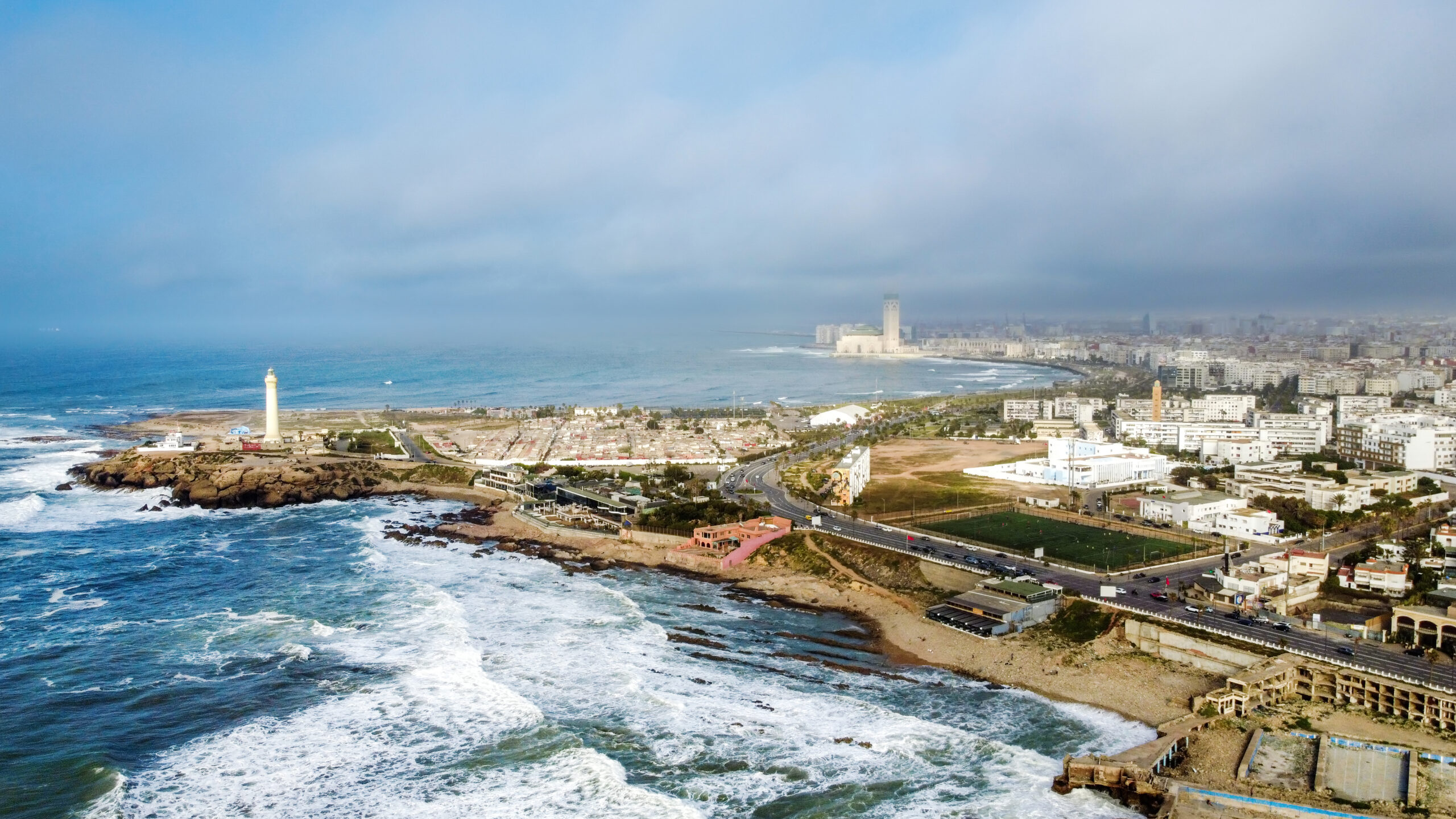
The price of new construction depends heavily on the neighborhood, the location, and the level of finish. The most exclusive new developments are found in Anfa and Anfa Superieur, where high-end residences and luxury apartments are being built. The coastal area around Ain Diab and the Corniche is also popular, offering ocean views and proximity to beach clubs, the Morocco Mall, and the Hassan II Mosque. The table below provides an indication of the approximate prices per square meter for new construction and high-end real estate in these sought-after neighborhoods.
| Neighborhood | Estimated price per square meter (MAD) | Character |
|---|---|---|
| Anfa / Anfa Superior | 22,000 to 28,000 | The most exclusive, luxury new-construction homes and villas |
| Ain Diab / Corniche | 20,000 to 25,000 | coast, ocean view, beach clubs, luxury |
These amounts are indicative figures for 2026 and may vary by street, project, and level of finish. In other central neighborhoods, new construction prices are generally lower, but supply is scarcer there because there is less space available for building. Keep in mind that asking prices are often higher than the final transaction prices, and that when buying off-plan, more favorable terms may apply to early registrants. Comparing neighborhoods and prices will help you determine a realistic budget before choosing a project.
If you're specifically interested in the coastal zone, you'll find more information in our article about Ain Diab and the Corniche More background information on the atmosphere, what’s available, and the location. If you’re considering an apartment rather than a villa, our overview of a Buy an apartment in Casablanca a clear picture of the possibilities, profitability, and key considerations. New-construction apartments are often in high demand on the rental market because of their comfort and low maintenance.
What should you look for in a new construction project?
When buying off-plan, you’re buying a promise, which is why a thorough due diligence check beforehand is essential. A beautiful brochure or an attractive rendering says little about the project’s reliability. The points below form the core of a thorough due diligence check and determine whether a new construction project is a safe investment.
- Developer's reputation: Review past projects, completion deadlines, and financial stability.
- Building Permit: Check whether a valid building permit (permis de construire) has been issued.
- Warranties upon delivery: Check which warranties apply in the event of delays, defects, and finishing issues.
- Separate Land Title Deed for each lot: Make sure your home has its own registered title deed.
- Payment schedule in the deed: Have the phases, amounts, and conditions clearly documented by a notary.
Developer's Reputation
When buying off-plan, choosing the developer is the most important decision you’ll make. An established developer with a track record of on-time project completions offers much greater certainty than an unknown developer. Ask about previously completed residential projects, visit the sites, and, if possible, speak with residents about the quality and whether the promised completion date was met. Also pay attention to financial stability: a developer that runs into trouble halfway through the project can delay or halt it. A good reputation is no guarantee, but it significantly reduces the risk.
Building Permit and Legal Basis
A new construction project may only be built with a valid building permit, the permis de construire. Verify that this permit has been issued and that the project complies with the land’s designated use and classification. A clear title to the property does not specify what may be built on it, so this verification must be done separately. Have your notary verify that the land on which the property is being built is properly registered and that the developer is authorized to sell it. This legal foundation is crucial for the security of your purchase and prevents you from facing permit issues later on.
Completion Guarantees and Your Own Titre Foncier
Check in advance what guarantees the contract offers in the event of delays, hidden defects, or a finish that differs from what was promised. Clear completion guarantees protect you if the project does not go as planned. Equally important is that your home ultimately receives its own Titre Foncier per lot: a registered, state-guaranteed title deed in your name. Without a separate title deed for each lot, your legal status remains uncertain. Read more about the importance of the title deed (Titre Foncier) and always have this checked before you pay.
The payment schedule for off-plan purchases
The hallmark of off-plan purchasing is that you pay the purchase price in installments, tied to the progress of construction. Instead of a single payment, you spread your expenses over the construction period, which makes the purchase more accessible. Each installment is typically paid when a specific phase is reached—such as the foundation, the structural work, and the finishing touches—up until final delivery. The exact schedule varies by project and is set out in the contract, so that both parties know when each amount is due.
It is important that the payment schedule be fully included in the notarial deed and that each payment be linked to a verifiable milestone in the construction process. This ensures you do not pay in advance for work that has not yet been completed. Have your notary verify whether the phases are realistic and whether safeguards are in place in case construction is delayed or halted. By thoroughly understanding the schedule in advance, you can plan your cash flow correctly and know exactly when you’ll need to have which amount available during the project’s duration.
Financing and Costs of New Construction
You can also partially finance new construction with a mortgage. Moroccan banks provide loans to non-residents, typically requiring a down payment of at least 30 percent in foreign currency, plus additional costs. Financing a home that is being built in phases works differently than financing an existing property, because the disbursement of the loan can be aligned with the construction phases. Discuss this with your bank in advance so that the disbursements of your loan align with the developer’s payment schedule and you do not create a financing gap during construction.
For additional costs, the same rule of thumb applies to new construction as to existing homes: expect to pay about 6 to 8 percent on top of the purchase price for registration, land registry, and notary fees. The tax benefit of new construction lies primarily in the exemption from property tax for the first five years, not in lower purchase costs. You can find a complete overview of interest rates, loan amounts, and the required down payment in our article on Mortgages and Financing for Foreigners. Also, keep in mind the due dates for each installment and each expense.
If you want to get the full picture—from the buying process and neighborhoods to the different types of homes—you'll find it in our A Complete Guide to Buying Real Estate in Casablanca. In it, we explain step by step how the purchase process works, what documents are required, and how you can make a purchase remotely using a notarized power of attorney. This will give you a complete picture before you commit to a specific new-construction project and make your first payment.
New construction or existing homes: Which is right for you?
Whether a new-construction property is the right choice depends on your goals and your time horizon. New-construction properties offer comfort, low expenses in the early years, and a tax benefit, but if you buy off-plan, you’ll need to be patient until completion and bear the risk of potential construction delays. Existing properties are available immediately, and you know exactly what you’re buying, but they often require more maintenance and do not qualify for the residential property tax exemption. For those investing with the intention of renting out the property, a new-construction apartment in a sought-after neighborhood is attractive due to its comfort and low maintenance costs, which help ensure it rents out quickly.
If you want to move into the home quickly and avoid the risk of delays, a move-in-ready existing home may be a better fit. If you’re patient and looking for a modern home with a staggered payment plan and tax benefits, a new construction project based on plans is a good option. Base your decision on a level-headed assessment of both options, your budget, and the quality of the specific project. If you’re unsure, an independent real estate agent or notary can help you evaluate the pros and cons in light of your situation and make a well-informed choice.
Common Mistakes You Should Avoid
- Buying off-plan without verifying the developer's reputation and financial stability.
- Making payments before a valid building permit (permis de construire) has been issued.
- Do not require a separate Titre Foncier for each lot, as this leaves your legal position uncertain.
- Do not link the payment schedule to verifiable construction phases in the notarial deed.
- Don't forget the additional costs of 6 to 8 percent and the financing arrangements during construction.
Frequently Asked Questions
What does “off-plan purchase” or “VEFA” mean?
Buying off-plan, known as VEFA in French, means that you are purchasing a home that has not yet been built or is not yet fully completed. You pay the price in installments as construction progresses, based on the plans, specifications, and finish lists set forth in the contract.
Are new construction projects exempt from tax?
Newly built homes are generally exempt from the annual property tax for the first five years. This makes new construction attractive from a tax perspective, as your annual expenses are lower during that period.
How much do new homes cost in Anfa and Ain Diab?
In Anfa and Anfa Superieur, the guide prices for new construction range from approximately 22,000 to 28,000 MAD per square meter. Along Ain Diab and the Corniche, prices range from about 20,000 to 25,000 MAD. These are indicative figures that vary by project.
How does the payment schedule work for off-plan purchases?
You pay the price in installments, tied to construction phases such as foundation work, structural work, and finishing, up until completion. Have the full schedule included in the notarial deed, with each payment linked to a verifiable milestone.
What should I look for in a new construction project?
Check the developer’s reputation and financial stability, the validity of the building permit, the completion guarantees, and whether your home will have its own Titre Foncier for each lot. Have your own notary review all of this before you make any payments.
Can I finance a new home with a mortgage?
Yes. Moroccan banks also provide loans to non-residents for new construction projects, typically requiring at least a 30 percent down payment in foreign currency. Work with your bank to ensure that the loan disbursements align with the developer’s payment schedule.
Are the additional costs lower for new construction?
No. Even with new construction, you should expect approximately 6 to 8 percent in additional costs for registration, the land registry, and the notary. The tax benefit of new construction lies in the exemption from property tax, not in lower purchase costs.
Please note: The prices, rates, and taxes listed are estimates based on public sources (2026) and may vary by neighborhood, project, and time. Always have the exact amounts confirmed by your notary, bank, or real estate agent before entering into any commitment.


 Dutch
 English
 French